

Table of Contents
ToggleMontessori tips can transform how children learn and grow at home. The Montessori method focuses on independence, hands-on learning, and respect for a child’s natural development. Parents don’t need special training or expensive materials to apply these principles. Simple changes to daily routines and home setups can make a big difference. This guide covers practical Montessori tips that any family can use to support their child’s curiosity and self-reliance.
Key Takeaways
- Apply Montessori tips by creating child-accessible spaces with low shelves, small furniture, and organized activity zones.
- Teach practical life skills like pouring, folding, and cooking to build independence, coordination, and confidence.
- Observe your child’s interests first, then support their natural curiosity instead of pushing structured activities.
- Protect your child’s concentration by avoiding unnecessary interruptions during focused play.
- Embrace mistakes as learning opportunities—involve children in solutions rather than scolding or fixing things for them.
- Praise effort over results to help children develop resilience and a healthy growth mindset.
Create a Child-Centered Environment at Home
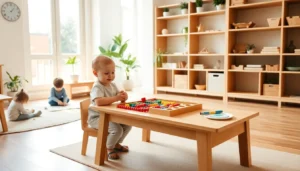
A child-centered environment sits at the core of Montessori tips for parents. The idea is simple: arrange spaces so children can access what they need without adult help.
Start with furniture. Low shelves, small tables, and child-sized chairs allow kids to sit, work, and reach items on their own. A step stool in the bathroom lets them wash hands and brush teeth independently. In the kitchen, store snacks and dishes on lower shelves so children can serve themselves.
Organize toys and materials thoughtfully. Display a few items at a time on open shelves rather than stuffing everything into bins. This setup helps children see their choices clearly and encourages them to return items after use. Rotate toys every few weeks to keep things fresh without overwhelming the space.
Create zones for different activities. A reading corner with a small bookshelf and comfortable cushion invites quiet time. An art area with paper, crayons, and scissors (age-appropriate) encourages creativity. These defined spaces help children understand where activities happen and build routine.
Safety matters, but don’t overprotect. Child-proof dangerous items, then let kids explore freely within safe boundaries. The goal is to build confidence through real experiences, not bubble-wrap their world.
Encourage Practical Life Skills
Practical life skills form a cornerstone of Montessori tips. These are everyday tasks that adults do without thinking, but for children, they’re powerful learning opportunities.
Toddlers can pour water from a small pitcher, wipe tables, fold washcloths, and put on their own shoes. Preschoolers can help prepare simple snacks, water plants, set the table, and sort laundry. School-age children can make their beds, pack lunches, and help with cooking.
These activities teach more than the task itself. Pouring water builds hand-eye coordination and concentration. Buttoning a shirt develops fine motor skills. Completing chores gives children a sense of contribution to the family.
Expect messes and imperfection. A three-year-old will spill water. A five-year-old will fold towels crookedly. That’s fine. The process matters more than the result. When parents step back and let children try, they send a clear message: “I trust you.”
Provide real tools, not toys. Child-sized brooms, glass cups (yes, glass, they learn to be careful), and actual cooking utensils work better than plastic imitations. Real tools show respect for children’s abilities and make the work feel meaningful.
Montessori tips like these turn ordinary moments into chances for growth. Breakfast becomes a lesson. Getting dressed becomes practice. Life becomes the classroom.
Follow the Child’s Lead and Interests
One of the most valuable Montessori tips is simple: observe before directing. Watch what draws a child’s attention, then support that interest.
If a child spends twenty minutes examining bugs in the backyard, lean into it. Get a magnifying glass. Check out library books about insects. This approach respects children as individuals with their own curiosities.
Avoid over-scheduling or pushing activities that don’t spark interest. A child who hates piano lessons but loves building blocks isn’t being difficult, they’re showing you who they are. Follow that signal.
Offer choices within limits. Instead of asking, “What do you want to do?” try, “Would you like to paint or play with clay?” This gives children control while keeping options manageable. Too many choices overwhelm: too few feel restrictive.
Let children set their own pace. Some kids read early: others don’t. Some master puzzles quickly: others need more time. Montessori tips emphasize that development isn’t a race. Comparisons to other children rarely help and often hurt.
Ask open-ended questions to extend learning. “What do you notice about this leaf?” works better than “This leaf is green, right?” Questions that invite exploration keep curiosity alive.
Limit Interruptions During Focused Play
Concentration is a skill children develop through practice. One of the most underrated Montessori tips involves protecting that focus.
When a child is deeply engaged, whether stacking blocks, drawing, or sorting objects, avoid interrupting unless necessary. Hold off on snack announcements, questions, or praise. Let them work.
This might feel unnatural. Parents often want to connect, help, or encourage. But interruptions break concentration and teach children that their focus doesn’t matter. Over time, kids learn to expect disruption and struggle to sustain attention.
Create conditions for deep work. Reduce background noise when possible. Turn off screens during play time. Keep siblings from grabbing materials mid-activity. These small adjustments protect the space children need to concentrate.
Wait until the child finishes before commenting. Then, instead of generic praise like “Good job.” try describing what you observed: “You stacked those blocks really high” or “You worked on that puzzle for a long time.” This kind of feedback acknowledges effort without creating dependence on external validation.
Montessori tips around focus also apply to transitions. Give warnings before changing activities: “In five minutes, we’ll clean up for lunch.” Abrupt shifts jar children out of their flow and often trigger resistance.
Embrace Mistakes as Learning Opportunities
Mistakes drive learning. This principle runs through all Montessori tips worth following.
When children spill, drop, or break something, resist the urge to scold or fix it immediately. Instead, involve them in the solution. Hand them a towel. Show them how to sweep up pieces. This teaches responsibility without shame.
Avoid correcting too quickly during activities. If a child places a puzzle piece wrong, wait. Often, they’ll notice and self-correct. If not, a gentle question, “Does that piece fit there?”, works better than taking over.
Model how adults handle mistakes. Say things like, “Oops, I dropped the egg. Let me clean it up.” Children learn that errors happen to everyone and aren’t catastrophic.
Praise effort over outcome. “You tried really hard on that drawing” matters more than “That’s a beautiful picture.” Effort-focused feedback builds resilience and a growth mindset. Children learn to value trying, not just succeeding.
Montessori tips emphasize that struggle has value. When children work through difficulty, whether tying shoes, solving problems, or managing frustration, they build confidence that lasts. Jumping in too fast robs them of that growth.