

Table of Contents
ToggleFinding the best Montessori school for your child can feel overwhelming. With hundreds of programs claiming to follow Dr. Maria Montessori’s methods, how do you know which ones actually deliver? The truth is, not all Montessori schools are created equal. Some offer authentic, child-centered learning environments. Others use the Montessori name without following its core principles.
This guide breaks down what separates the best Montessori programs from the rest. Parents will learn what to look for, which questions to ask, and how to spot red flags during school visits. Whether a family is exploring Montessori for a toddler or an elementary-age child, these practical insights will help them make a confident decision.
Key Takeaways
- The best Montessori schools feature hands-on learning, mixed-age classrooms, and three-hour uninterrupted work periods that foster deep concentration.
- Look for teachers with AMI or AMS certification—these credentials signal authentic Montessori training and expertise.
- During school visits, ask about teacher qualifications, daily schedules, and whether the program supplements Montessori materials with worksheets or screens.
- High-quality Montessori classrooms show engaged children working independently, peer teaching across age groups, and teachers acting as guides rather than lecturers.
- Red flags include rows of desks, reward charts, short work periods, and vague answers about staff credentials.
- The best Montessori programs create calm, organized environments with child-sized furniture and authentic Montessori materials like the pink tower and golden beads.
What Makes a Montessori School Stand Out
The best Montessori schools share several defining characteristics. They prioritize hands-on learning, mixed-age classrooms, and student-led exploration. Children choose their own activities from a prepared environment, working at their own pace rather than following a rigid schedule.
Authentic Montessori programs use specific learning materials designed by Dr. Montessori herself. These materials teach abstract concepts through concrete, sensory experiences. A child learning math, for example, might use golden beads to physically hold and count quantities before moving to written numbers.
Classroom structure also sets top Montessori schools apart. Teachers serve as guides rather than lecturers. They observe each child, introduce new materials when the child is ready, and step back to allow independent discovery. This approach builds problem-solving skills, self-discipline, and intrinsic motivation.
Another hallmark? Uninterrupted work periods. The best Montessori environments give children three-hour blocks to focus deeply on their chosen activities. This extended time allows concentration to develop naturally, something rare in traditional education settings.
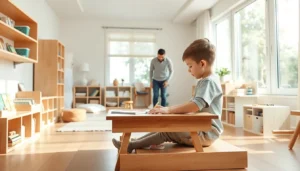
Finally, quality Montessori schools create calm, orderly spaces. Shelves are organized at child height. Materials are beautiful and inviting. The atmosphere encourages focus and respect for the learning environment.
Key Factors to Consider When Choosing a Montessori Program
Selecting the best Montessori school requires evaluating several important factors. Parents should look beyond marketing materials and examine what actually happens in the classroom.
Age Groups and Classroom Environments
Montessori education divides children into multi-age groupings. Infant/toddler programs serve children from birth to age 3. Primary classrooms include ages 3 to 6. Elementary spans ages 6 to 12, often split into lower (6-9) and upper (9-12) levels.
Mixed-age classrooms are essential to the Montessori method. Younger children learn from older peers. Older children reinforce their knowledge by teaching concepts to younger classmates. This structure builds community and encourages collaboration over competition.
The physical environment matters too. Look for child-sized furniture, natural materials, and organized shelves with accessible learning materials. The best Montessori classrooms feel warm and purposeful, never cluttered or chaotic.
Teacher Training and Accreditation
Teacher credentials are perhaps the most critical factor. The best Montessori schools employ teachers with certification from recognized training programs. The Association Montessori Internationale (AMI) and American Montessori Society (AMS) are the two most respected credentialing bodies.
AMI training follows Maria Montessori’s original methods closely. AMS programs incorporate some adaptations for American educational contexts. Both require extensive coursework, practice teaching, and examinations.
School-level accreditation also signals quality. AMI and AMS accredit entire schools, not just individual teachers. This accreditation process evaluates classroom environments, teacher qualifications, and adherence to Montessori principles.
Parents should ask directly about teacher training. A quality Montessori program will proudly share staff credentials and explain their hiring standards.
Questions to Ask During Your School Visit
A school tour reveals more than any website can. Parents visiting Montessori programs should come prepared with specific questions.
Start with teacher qualifications: “What Montessori training do your teachers hold?” and “Which organization certified them?” Vague answers are a warning sign. The best Montessori schools hire teachers with AMI or AMS credentials and can specify their training programs.
Ask about daily schedules: “How long are your uninterrupted work periods?” Programs offering only 45-minute or one-hour blocks aren’t following authentic Montessori practice. Three-hour work cycles allow children to engage deeply with materials.
Inquire about curriculum: “Do you supplement Montessori materials with other programs?” Some schools blend Montessori with traditional worksheets or screen-based learning. This dilutes the method’s effectiveness. The best Montessori programs trust the original materials and approach.
Question classroom ratios: “How many children are in each classroom, and how many teachers?” Montessori classrooms typically hold 25 to 35 children with one lead teacher and one or two assistants. Smaller isn’t always better, Montessori works because children learn from each other.
Finally, ask about parent involvement: “How do you communicate with families about their child’s progress?” Quality Montessori schools offer regular conferences, observation opportunities, and clear explanations of what children are learning.
Signs of a High-Quality Montessori Experience
What does the best Montessori education look like in practice? Several observable signs indicate a program is doing it right.
Children appear engaged and focused. They move purposefully around the classroom, selecting materials and working independently or in small groups. There’s a productive hum rather than chaos or forced silence.
Teachers interact thoughtfully with individual children. They kneel to speak at eye level, give brief lessons, then step back. They don’t stand at the front of the room lecturing or managing behavior through rewards and punishments.
The classroom contains complete sets of Montessori materials. Look for the pink tower, brown stair, golden beads, moveable alphabet, and geography puzzles. These classic materials serve specific developmental purposes.
Children of different ages work together naturally. A five-year-old might help a three-year-old with a puzzle. A nine-year-old could explain a math concept to a seven-year-old. This peer teaching happens organically in well-run Montessori classrooms.
The best Montessori schools also demonstrate respect for children. Adults speak calmly. Children’s work is treated as important. The environment supports independence, children serve their own snacks, clean up their materials, and manage their belongings.
Red flags include excessive teacher direction, rows of desks, worksheets, and reward charts. These elements contradict Montessori philosophy. A school using the Montessori name while employing traditional methods isn’t delivering an authentic experience.